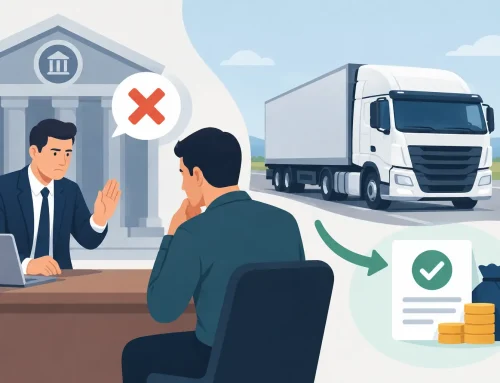
A work vehicle can be the difference between taking the next job and turning it away. This business vehicle finance guide is for Australian business owners who need a ute, van, truck, trailer or fleet vehicle, but do not fit a bank’s neat lending box. A past credit issue, seasonal income, limited financials or a recent start-up does not automatically mean finance is out of reach.
The right facility should suit how you earn, what you are buying and how much cash you need to keep in the business. The lowest advertised rate is only one part of that decision.
Start with the vehicle’s job in your business
Before comparing lenders, be clear about the vehicle’s role. A sole trader replacing an ageing ute has different needs from a transport operator buying a prime mover, or a growing trade business adding three vans. The asset, repayment term, deposit and documentation requirements can all change.
Ask whether the vehicle will produce income immediately, whether it is new or used, and whether it will be used mainly for business. Also consider the full cost of ownership: insurance, registration, fuel, tyres, servicing and downtime. Finance that looks manageable on purchase day can put pressure on cash flow if those running costs have been ignored.
A newer vehicle may attract sharper pricing and longer terms, but it can cost more upfront. An older truck or specialised asset may be essential for the work, yet some lenders apply age limits or require a shorter loan term. There is no one best option. It depends on the asset and your trading position.
The main types of business vehicle finance
Most business vehicle funding falls into a few familiar structures. The names matter less than the practical outcome: who owns the vehicle, how repayments work, and what happens at the end of the agreement.
Chattel mortgage
With a chattel mortgage, the business generally owns the vehicle from settlement while the lender takes security over it. You make regular repayments over an agreed term, often with an optional balloon payment at the end.
This is commonly used by ABN holders buying vehicles for predominantly business use. A balloon can reduce monthly repayments, which may help preserve working capital. However, it leaves a lump sum to pay, refinance or clear by selling the vehicle at the end. Set it too high and you may owe more than the vehicle is worth.
Commercial hire purchase
Commercial hire purchase lets the financier buy the vehicle and hire it to the business through fixed repayments. Ownership generally transfers after the final payment and any agreed residual is met.
It can suit operators who value predictable repayments and want a straightforward path to ownership. As with any fixed-term facility, check the total amount payable, early payout rules and whether a balloon is included.
Finance lease and operating lease
A finance lease is another way to use a vehicle without buying it outright at the start. The lender owns the asset and the business makes lease payments for the agreed term. At the end, there may be options to pay a residual, refinance, return the vehicle or trade it, depending on the contract.
An operating lease is often more suitable where regular replacement matters, such as fleet vehicles. It may include maintenance or other running-cost arrangements, although inclusions vary widely. Read the return conditions carefully. Excess kilometres, damage and wear beyond the agreement can create unexpected costs.
Novated leasing
Novated leasing is usually an employee salary-packaging arrangement rather than a direct business asset loan. It can be relevant for directors or staff, but it is not automatically the best funding method for a business-owned work vehicle. Tax treatment and fringe benefits tax considerations should be discussed with a qualified accountant or tax adviser.
Choosing repayments without starving cash flow
The goal is not merely to get approved. It is to obtain a repayment structure the business can carry through quieter months as well as busy ones.
A larger deposit reduces the amount borrowed and may improve the lender’s view of the application. But using every available dollar for a deposit can be risky if it leaves no buffer for wages, BAS, supplier invoices or a repair on another vehicle. For many operators, retaining some cash is more valuable than eliminating a small portion of interest.
Loan terms are commonly set between two and seven years, subject to the vehicle’s age and lender policy. A longer term usually lowers the regular repayment but can increase total interest paid. A shorter term costs more each month but builds equity faster. If you choose a balloon, make sure it reflects likely resale value, not just the lowest repayment you can obtain.
For example, a plumber buying a late-model van may use a modest deposit and a manageable balloon because the vehicle should retain reasonable value. A business buying an older specialised truck may be better served by a shorter term and lower balloon, particularly where resale is harder to predict.
What lenders assess in a business vehicle finance application
Lenders look at the vehicle, the business and the people behind it. Their approach differs. A mainstream bank may place heavy weight on clean credit, time in business and full financial statements. Specialist asset lenders may take a more practical view where the asset is suitable and the deal makes commercial sense.
Expect questions about your ABN, GST registration where applicable, business activity, time trading, income, existing debts and the vehicle being purchased. The lender may also assess personal credit history, especially for a sole trader, partnership or director guarantee.
The supporting documents depend on the lender and loan size. Full-document applications may require tax returns, financial statements, bank statements and identification. Low-document options can sometimes rely more heavily on an ABN, GST registration, business bank statements, an accountant’s letter or a declaration of income. Low doc does not mean no checks. The lender still needs to see that the repayments are reasonable.
A quote, tax invoice or purchase contract for the vehicle is also usually required. For used vehicles, lenders may consider the age, kilometres, condition and seller type. Buying privately can be possible, but requirements can be tighter than buying from a licensed dealer.
If your bank has said no
A decline is frustrating, but it is not always a verdict on your ability to pay. Banks can decline vehicle finance because of a recent default, paid or unpaid ATO debt, mortgage arrears, high existing commitments, a thin credit file, limited time in business or inconsistent income on paper.
Self-employed borrowers are often caught here. You may have steady work and sound cash flow, but taxable income looks lower after legitimate deductions. Or you may have started trading recently and lack two years of financials. These are real obstacles, yet they are circumstances to be assessed, not labels that define you.
The practical response is to avoid making several rushed applications. Multiple credit enquiries in a short period may make the situation harder. Instead, identify the reason for the decline, gather current evidence of income and conduct, and match the application to a lender whose policy fits it.
A specialist broker can help structure this conversation. Non Conforming Loans works with business owners who need a second opinion when a bank says no, including applicants with adverse credit, low-doc requirements or non-standard income. The aim is not to force an unsuitable approval. It is to find out whether there is a sensible funding line and what terms it would involve.
Compare the whole offer, not just the rate
When two approvals arrive, put them side by side. Compare the interest rate, but also look at the establishment fee, monthly or account fees, broker fee if any, balloon amount, term, security, early repayment conditions and total payable over the life of the facility.
Check whether the rate is fixed or variable and whether repayments can change. Ask how comprehensive insurance must be arranged, whether the lender must be noted on the policy, and what happens if the vehicle is written off. For leases, confirm residual obligations and end-of-term choices in writing.
Tax and GST outcomes can influence the right structure, but they should not be guessed at. Your accountant can explain how the proposed arrangement may affect GST credits, deductions, depreciation, the instant asset write-off where available, and personal-use adjustments. Finance decisions work best when your broker and accountant are looking at the same facts.
Get ready before you apply
A well-prepared application can save time and reduce back-and-forth. Have the vehicle quote ready, make sure your ABN details are current, and review business bank statements for returned payments or unexplained transfers. If there was a credit event, be upfront and prepare a short, factual explanation of what happened, what has changed and how the account was resolved.
Most importantly, borrow for a vehicle that supports the next stage of the business rather than stretching it to impress. The right finance should leave room to trade, pay people and handle the unexpected. When the paperwork or credit history is more complicated than a bank prefers, a clear application and the right specialist lender can give you a practical way forward.