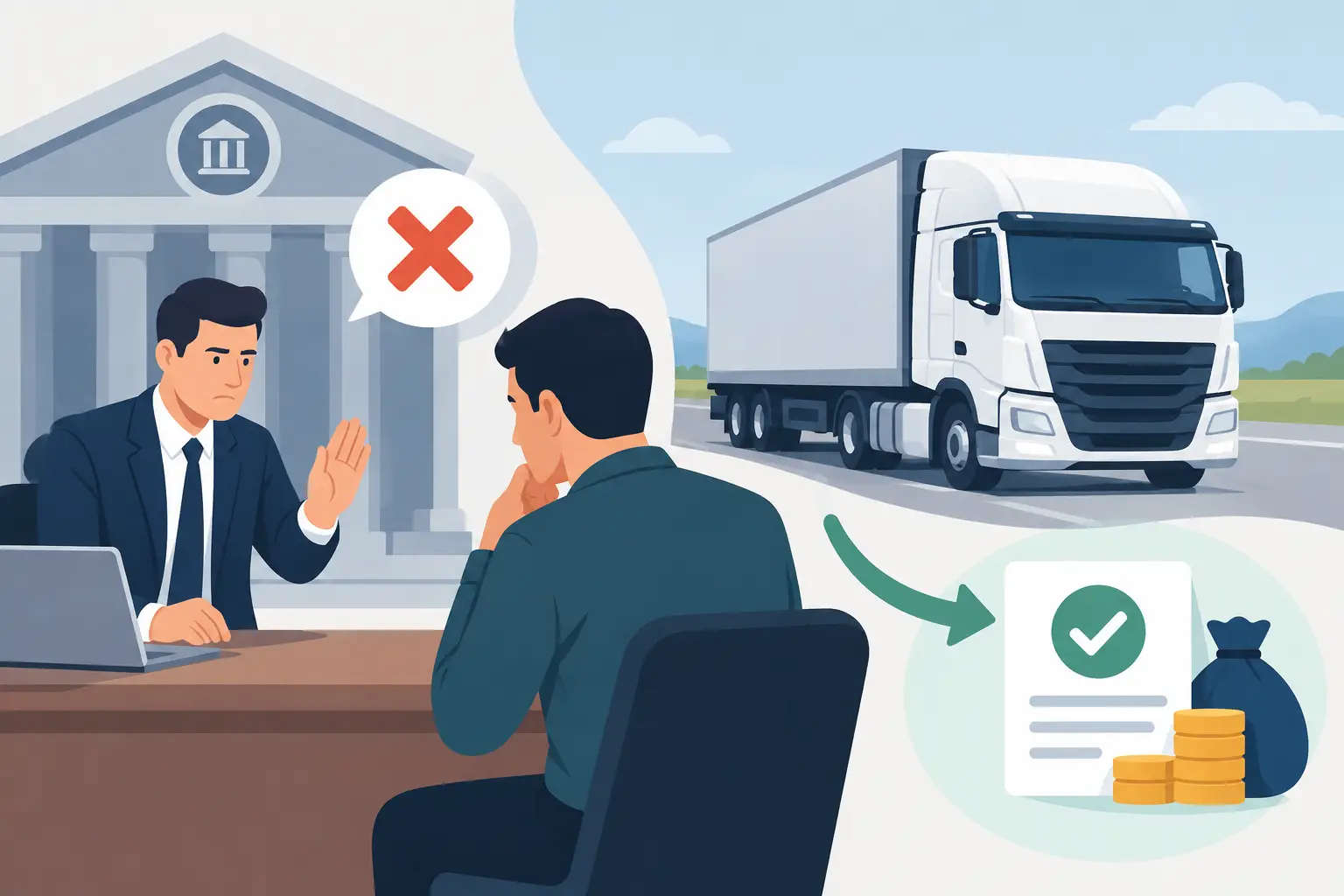
A truck sitting ready at a dealer’s yard can represent the next contract, a larger service area or the chance to move from subcontractor to business owner. But truck purchase finance can become difficult when a bank sees an old default, uneven income, a new ABN or financials that do not fit its policy. That does not automatically mean the purchase is out of reach.
For owner-drivers and transport businesses, the right finance is not simply the loan with the lowest advertised rate. It is finance that matches the truck, the work it will perform and the way your business actually earns income. A poor structure can put unnecessary pressure on cash flow before the vehicle has had a chance to pay for itself.
What truck purchase finance can cover
Truck finance is a form of asset finance used to buy new or used commercial vehicles. Depending on the lender and your circumstances, it may also help fund a prime mover, rigid truck, tipper, tray truck, refrigerated vehicle, trailer, crane truck or specialised fit-out. Some facilities can include GST, on-road costs, accessories and equipment required to put the vehicle to work.
The vehicle generally acts as security for the loan. This can give lenders more comfort than an unsecured business loan, although it does not remove the need to show a workable repayment position. They will still consider the truck’s age and value, your deposit, credit history, business experience and the income available to support repayments.
There is no single structure that suits every operator. A business buying its first used truck for local deliveries may need a different solution from an established fleet replacing a late-model prime mover. The purchase price matters, but the commercial purpose matters just as much.
Why a bank may decline a truck finance application
Mainstream lenders often use tight credit rules and standard documentation requirements. Their decision may reflect policy rather than whether you can make the repayments. This is especially frustrating when you have regular work lined up and a truck is essential to delivering it.
A bank decline can happen where your credit file shows defaults, late payments, a paid judgment or previous hardship. It can also occur when you are self-employed and cannot provide the latest full financial statements and tax returns, even though bank statements show genuine trading income.
Other common sticking points include a recently established business, a discharged bankruptcy, tax debt on a payment arrangement, fluctuating contract income, a truck that is older than the bank accepts, or an application for a high percentage of the purchase price. None of these factors should be ignored. They need to be explained properly and matched to a lender prepared to assess the complete picture.
Truck purchase finance options worth considering
A chattel mortgage is commonly used by businesses registered for GST. You own the truck from settlement, while the lender takes security over it. Repayments may be structured over an agreed term, and a balloon payment can sometimes be included to reduce monthly repayments. A balloon can assist cash flow, but it leaves a larger amount owing at the end, so it needs a realistic exit plan.
A finance lease may suit some businesses that prefer the financier to own the asset during the term. At the end, there may be options to pay the residual, refinance it, return the vehicle or upgrade, subject to the agreement. The accounting and tax treatment varies, so obtain advice from your accountant before choosing a structure based on tax outcomes.
A commercial hire purchase arrangement is another asset-backed option. It can work similarly to a chattel mortgage in practical terms, with payments spread over a set period and ownership transferring once obligations are met.
Specialist and non-bank lenders may assess applications that fall outside a major bank’s comfort zone. They may consider low-doc applications, alternative evidence of income, adverse credit explanations or newer businesses. Flexibility is useful, but it can come with a higher rate, fees, a larger deposit requirement or tighter terms. The goal is not to chase approval at any cost. It is to assess whether the repayment remains sensible for the business.
Prepare the application around the work, not just the vehicle
A strong application tells a clear story: what you are buying, why you need it and how it will generate income. This is particularly valuable if your credit history is not perfect or your paperwork is non-standard.
Start with a detailed invoice or purchase contract showing the truck’s make, model, year, kilometres, purchase price and any included equipment. Lenders will also want to know whether you are buying from a dealer or private seller. Private sales can be financeable, though the lender may apply extra valuation and settlement checks.
Then gather evidence of your ability to repay. For a PAYG applicant, this may include payslips and bank statements. For a self-employed operator, it could include business bank statements, BAS, accountant-prepared figures, invoices, signed work contracts, remittance advice or evidence of regular customers. If you have a transport contract beginning after settlement, provide it where possible. Future work is stronger when supported by a credible agreement and your experience in the industry.
If there is adverse credit, do not leave the lender to make assumptions. Explain what happened, when it occurred and what has changed. A one-off illness, relationship breakdown, delayed customer payment or business interruption may have a different impact from ongoing unmanaged arrears. Evidence that debts have been repaid, payment arrangements are being maintained or your position has stabilised can help place the file in context.
Work out the true monthly cost before you commit
A finance repayment is only one line in the operating budget. Before signing a contract, allow for comprehensive insurance, registration, fuel, tyres, servicing, tolls, compliance costs, repairs and downtime. If the truck needs a body build, refrigeration unit or trailer, make sure those costs are accounted for rather than assuming they will be easy to fund later.
Consider the difference between a shorter term with higher repayments and a longer term with lower repayments. A longer term may protect working capital, but you could pay more interest overall and risk owing more than the truck is worth if its value falls quickly. This can matter if you need to sell, refinance or replace it early.
A deposit can improve the application and reduce repayments, but putting every available dollar into the purchase can leave the business exposed to its first unexpected repair or slow-paying customer. The right deposit is one that supports approval while preserving a sensible cash buffer.
Also look closely at any balloon payment. It is not a discount and it does not disappear. By the end of the term, you need enough equity in the truck, available cash or refinancing capacity to deal with it. For a vehicle with heavy kilometres or a specialised body, be conservative about its future resale value.
Used truck finance needs extra care
A used truck can be a practical way to enter the industry or expand capacity without the price tag of a new vehicle. However, the cheapest truck is not always the most affordable. Age, kilometres, maintenance history and parts availability can affect both lender appetite and operating costs.
Before applying, arrange an independent mechanical inspection and check the service history. Confirm the vehicle identification details, whether there is existing finance registered against it and whether the body, trailer and accessories are included in the sale. If a lender limits the age of the asset at the end of the loan term, that could affect the repayment period available to you.
It is also worth checking whether the truck is fit for the work you have secured. A vehicle that meets today’s job but cannot meet customer specifications or compliance requirements next year may become an expensive short-term solution.
When your bank says no, get a second opinion
A decline from one lender is not a final verdict on your business or your ability to buy a truck. It may simply mean the application was presented to a lender whose policy does not suit your circumstances. The most useful next step is an honest assessment of your deposit, income evidence, credit position, vehicle choice and timeframe.
Non Conforming Loans can help borrowers who need truck purchase finance structured around real-world circumstances, including low-doc income, previous credit issues or a policy decline from a mainstream bank. The focus should be on matching the application to an appropriate specialist lender and being clear about the costs before you proceed.
A truck should create earning capacity, not become a financial weight that limits every business decision. Take the time to structure the finance around realistic repayments and a genuine work plan, and you give the purchase a far better chance of supporting the road ahead.