A profitable business does not always produce neat, bank-ready financial statements on demand. If you are a tradie, consultant, retailer, contractor or company director, you may be asking, how do low documentation loans work for self-employed individuals? The short answer is that specialist lenders can assess your borrowing capacity using alternative evidence of income, rather than relying only on the full tax returns and financials a major bank may require.
Low doc finance is not a shortcut around affordability. It is a different way of proving it. For business owners with sound cash flow but complex, delayed or tax-effective financials, it can provide a practical path to buying, refinancing or releasing equity when your Bank says NO.
How low documentation loans work for self-employed borrowers
A low documentation loan, commonly called a low doc loan, is designed for borrowers who cannot provide the usual two years of tax returns, notices of assessment and detailed business financial statements. Instead, a lender may use a combination of an accountant’s letter, a declaration of income, recent business activity statements, business bank statements or GST registration to form a view of your income.
The lender still needs to be satisfied that the loan is suitable and affordable. They will look at the overall picture: the consistency of money flowing into your business, your declared income, existing debts, living expenses, credit history and the property offered as security. A low doc application is therefore not the same as a no-doc application. You should expect to provide meaningful evidence and answer questions about how your business operates.
For residential lending, the exact assessment method depends on the lender and your circumstances. Some place greater weight on six to twelve months of business bank statements. Others may accept an accountant’s confirmation that you have operated your business for a set period and can support the declared income. The stronger and more consistent the evidence, the more options you are likely to have.
When a low doc loan may suit your situation
Low doc loans can be useful when your taxable income does not fully reflect your current earning capacity. A business owner may have claimed legitimate deductions, reinvested profits into stock or equipment, or recently won contracts that are not yet visible in prior-year returns. You may also be newly self-employed after years in the same industry, with stable work but limited completed financial years.
They can be used for a range of purposes, including purchasing a home or investment property, refinancing an existing mortgage, consolidating high-interest debts, funding construction, accessing equity for business working capital, or purchasing commercial property. The right structure depends on what the funds are for and whether the security is residential or commercial.
A low doc loan is not automatically the best answer simply because you are self-employed. If you have current financials and tax returns, a full documentation loan may offer lower rates or more lender choices. The value of low doc lending is flexibility when standard paperwork does not tell the full story.
What lenders usually assess
Specialist lenders look beyond a single tax return, but they do not ignore risk. They want to see a credible, sustainable business and a loan amount that makes sense against your cash flow and security.
Your ABN and GST history can help establish how long you have been trading. Regular credits into a business account can demonstrate ongoing turnover, while business activity statements may support the income you declare. An accountant’s letter can add weight where it confirms your business structure, trading history and ability to service the proposed debt.
Lenders will also assess your personal position. This includes credit reports, current mortgages, personal loans, credit cards, tax debt, dependants and household expenses. Past credit issues do not always end an application, particularly where there is a clear explanation and the problem has been resolved or is being managed. However, they can affect the available loan-to-value ratio, interest rate and lender selection.
The property itself matters too. A standard residential property in a metropolitan area may give a lender more comfort than a specialised property, remote location or unusual security. The lower your loan-to-value ratio, or LVR, the more flexible a lender may be. A larger deposit or equity position can reduce risk and may improve pricing.
Documents you may need for a low doc application
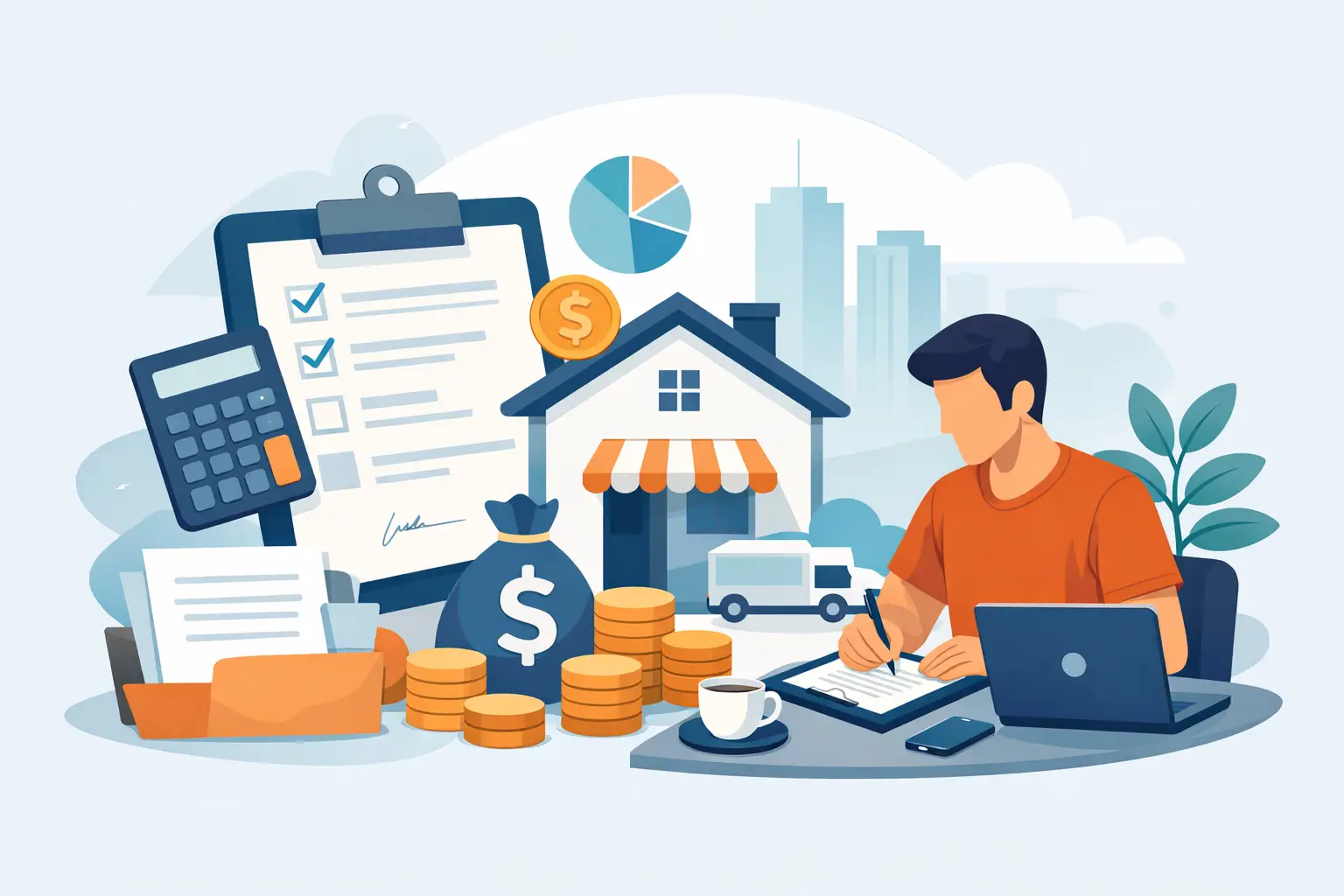
Requirements differ between lenders, so there is no single low doc checklist. In many cases, you may be asked for identification, evidence of ABN and GST registration, business bank statements, BAS statements, an accountant’s letter or income declaration, and statements for your existing liabilities.
If you are buying a property, the lender will also need the contract of sale. If you are refinancing, they will usually request your current loan statements and details of the purpose for any additional funds. For cash-out requests, expect closer questions about where the money is going, especially if it is intended for tax debt, a business purchase or working capital.
Be accurate with every figure you provide. Inflating income can derail an application and create much bigger problems later. A specialist broker can help identify the evidence that best represents your real position before the application is submitted.
The application process is about matching, not guessing
A common mistake is applying to several lenders at once after a bank decline. Multiple applications can create unnecessary credit enquiries and do not fix a policy issue. It is usually better to understand why the first lender said no, then approach a funding line that fits your documentation, credit profile, property type and purpose.
The process normally starts with an assessment of your income evidence, liabilities, security and required loan amount. From there, a broker can narrow the field to lenders whose low doc policy is appropriate. Once a lender is selected, documents are collected, serviceability is assessed and the property valuation is ordered if required.
Approval may be conditional at first. Conditions can include updated bank statements, clarification of transactions, confirmation of BAS lodgements, payout figures or an acceptable valuation. Responding quickly and consistently helps keep the file moving. If your business income is seasonal, explain that early and provide evidence that puts quieter months in context.
Understand the trade-offs before you proceed
Low doc loans can be more expensive than full doc loans because the lender is taking on additional verification risk. Depending on the lender, this can mean a higher interest rate, risk fee, lender’s mortgage insurance cost, lower maximum LVR or tighter cash-out limits. Fees and loan features also vary considerably.
That does not make low doc finance poor value. If it allows you to refinance expensive debt, secure a property purchase, protect business cash flow or avoid delaying a worthwhile opportunity, the overall outcome may be favourable. The key is comparing the total cost and flexibility of the loan against the benefit it delivers, not looking at the rate alone.
You should also consider whether the loan has an offset account, redraw facility, fixed or variable rate options, early repayment costs and the ability to refinance later. Many borrowers use low doc lending as a practical solution while their financial records catch up, then review their options once they can qualify under a mainstream policy.
A second opinion can change the direction of your application
Self-employment should not force you to fit a bank’s one-size-fits-all template. If your income is real, your business is trading and the proposed loan is affordable, there may be a specialist solution even when conventional lenders have declined you. Non Conforming Loans can assess the documents you do have and help structure an application around your actual circumstances.
The best next step is not to guess what a lender will accept. Gather your recent business records, be clear about the purpose of the funds, and seek a second opinion from someone who understands low doc policy. A well-matched application gives your business story the chance to be assessed properly.