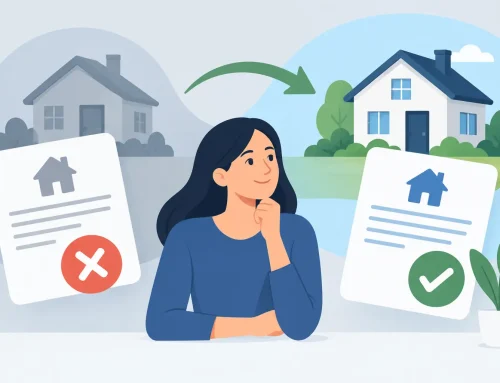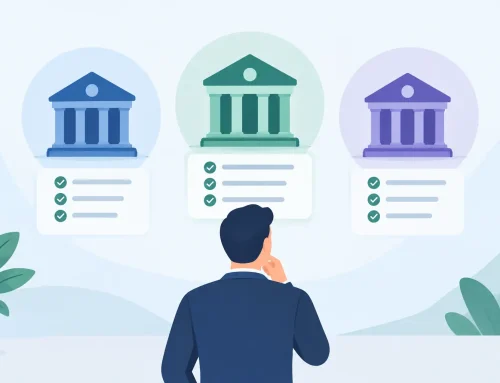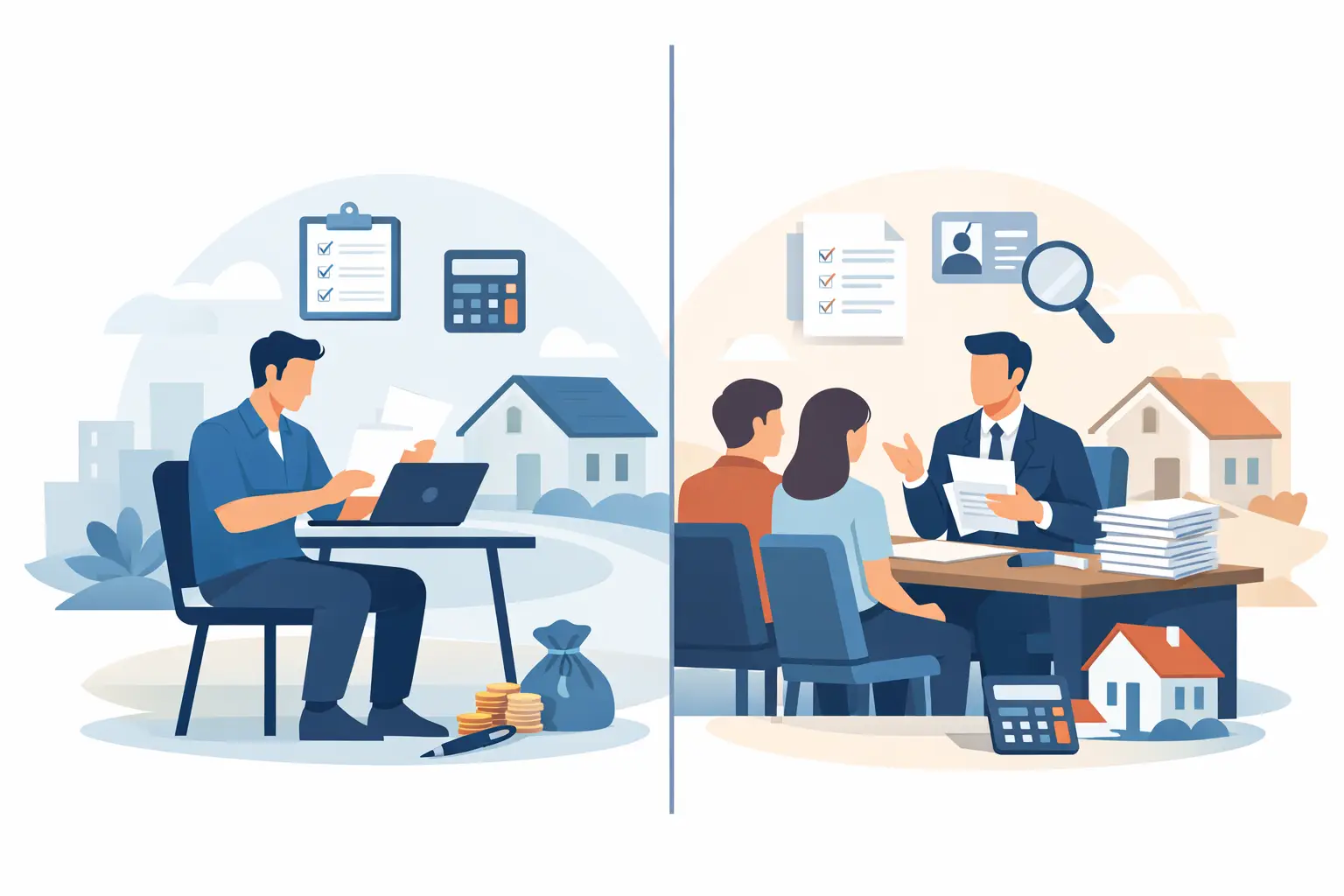
A profitable business, steady customer payments and a strong deposit can still be met with a bank decline if your paperwork does not fit its checklist. So, how do low doc home loans differ from standard home loans? The biggest difference is the way a lender verifies your income, but that change can also affect your interest rate, deposit, loan limit and the evidence required before approval.
For many self-employed Australians, a low doc loan is not a shortcut around affordability. It is a practical way to show that you can repay a home loan when two years of conventional financials do not tell the full story. When your Bank says NO because your documents are incomplete, out of date or do not reflect your current trading position, a specialist lender may take a more considered view.
What is a standard home loan?
A standard, or full doc, home loan is the path most commonly used by PAYG employees and established business owners with complete financial records. The lender generally wants detailed evidence of income, expenses, liabilities and assets before deciding how much you can borrow.
For an employee, this usually means recent payslips, PAYG summaries or income statements, employment details and bank statements. A self-employed applicant applying for a full doc loan will often need two years of personal and business tax returns, notices of assessment, financial statements and business activity statements.
This approach gives the lender a detailed picture of income over time. If you meet its credit policy, full doc lending can offer sharper pricing and a broader selection of mainstream loan features. But it can become restrictive when the paperwork does not match your real capacity to repay.
How do low doc home loans differ from standard home loans?
Low doc home loans use alternative income verification. Rather than relying entirely on full tax returns and financial statements, the lender may assess documents such as recent BAS, business bank statements, an accountant’s letter or declaration, GST registration, and evidence that the business has been operating consistently.
The exact evidence depends on the lender and your circumstances. Some lenders accept a combination of documents, while others have more specific requirements for particular industries, company structures or loan sizes. A low doc application is still assessed for serviceability. The lender needs a reasonable basis to believe the repayments are affordable.
The key difference is flexibility, not the removal of lending standards. Low doc lenders understand that business income can be seasonal, that deductions may reduce taxable income, and that an owner who has recently grown their business may not yet have a neat two-year set of accounts.
Income evidence: different, not absent
A common misunderstanding is that low doc means no documents. In reality, it means less traditional documentation. You may still need to provide identification, bank statements, a credit report, details of existing debts, property information and proof of your contribution or deposit.
A lender may compare declared income against business turnover, account conduct and the type of work you do. If the figures do not stack up, the application may be declined or the lender may request further evidence. Being accurate matters. Overstating income on a low doc declaration can have serious consequences and can put both the loan and your property at risk.
Interest rates and fees may be higher
Because a low doc loan can present more uncertainty for the lender, its interest rate is often higher than a comparable prime full doc loan. Establishment fees, risk fees or lender’s mortgage insurance may also apply, particularly where the loan-to-value ratio is high.
That does not automatically make a low doc loan the wrong choice. The real question is whether the loan supports your plan. For example, paying a little more for a loan that lets you purchase a suitable home now, refinance expensive business debt, or consolidate high-interest personal debts may be worthwhile. On the other hand, if you can reasonably wait until your financials are complete, a full doc option may deliver better long-term pricing.
A good loan structure considers the total cost, not just the advertised rate. Repayment type, fees, redraw availability, offset options, fixed versus variable choices and the ability to refinance later can all matter.
Deposit and LVR requirements can be stricter
Standard lenders may offer high-LVR options to borrowers with strong full documentation and clean credit. Low doc lending can require a larger deposit because the lender is taking a more flexible approach to income verification.
Your available LVR will depend on the lender, property type, location, credit history, declared income and loan purpose. A borrower purchasing an established house in a major metropolitan area with a solid deposit may have more options than someone seeking a high-LVR loan on a specialised property or in a remote postcode.
A larger deposit can reduce the lender’s risk and may improve your rate or product choices. If your deposit is limited, it is worth examining whether a family guarantee, additional security or a staged plan to improve your position is appropriate. These options need careful consideration because they involve real obligations for everyone involved.
Credit history is assessed differently too
A standard home loan often works best for applicants with clean credit and straightforward income. Some low doc lenders are also more open to borrowers with credit issues, such as missed repayments, defaults, tax debt arrangements or a past bankruptcy that has been discharged.
Flexibility does not mean every credit issue is ignored. Lenders will look at what happened, when it happened, whether the issue is resolved and how you have managed your commitments since. A one-off problem during a difficult period is viewed differently from ongoing unpaid liabilities or recent arrears.
This is where a specialist assessment can make a genuine difference. A bank’s automated policy may see only a decline reason. A specialist lender may consider the broader story: current income, available equity, repayment conduct and a clear reason for the past event.
Who may suit a low doc home loan?
Low doc loans are generally designed for self-employed borrowers who can demonstrate genuine income but do not have the full paperwork required by a mainstream bank. This can include sole traders, contractors, company directors, partners and business owners whose latest financials are not yet complete.
They can also help where taxable income appears lower than actual cash flow because of legitimate business deductions. For instance, a tradie who has invested in equipment, a ute or new staff may have a healthy pipeline of work and reliable deposits into the business account, while their taxable income does not meet a bank’s standard servicing calculation.
A low doc loan is less likely to suit someone with no verifiable income at all. If income is irregular, it may still be possible to apply, but the lender will need enough evidence to understand its source and consistency. Each case comes down to the documents available and the strength of the overall application.
Choosing between low doc and full doc finance
The best option is not always the loan with the lowest starting rate. It is the loan you can qualify for, afford comfortably and use to move forward without creating unnecessary pressure.
If you have complete, current financials and meet mainstream policy, a standard full doc loan may be the more cost-effective choice. If your business is growing, your returns are delayed, or your taxable income does not reflect your real position, low doc finance may provide a practical pathway.
Before applying, gather the clearest evidence you have of income and business activity. Keep personal and business accounts well managed, identify any credit issues early, and be upfront about existing debts. Trying to hide a problem usually narrows your options. Explaining it properly may open the right one.
When the bank’s answer does not reflect your ability to repay, getting a second opinion can be worthwhile. Non Conforming Loans can assess the documents you do have, consider specialist lender options and help structure a loan around your actual circumstances. The right path is the one that gives your next move a solid footing.