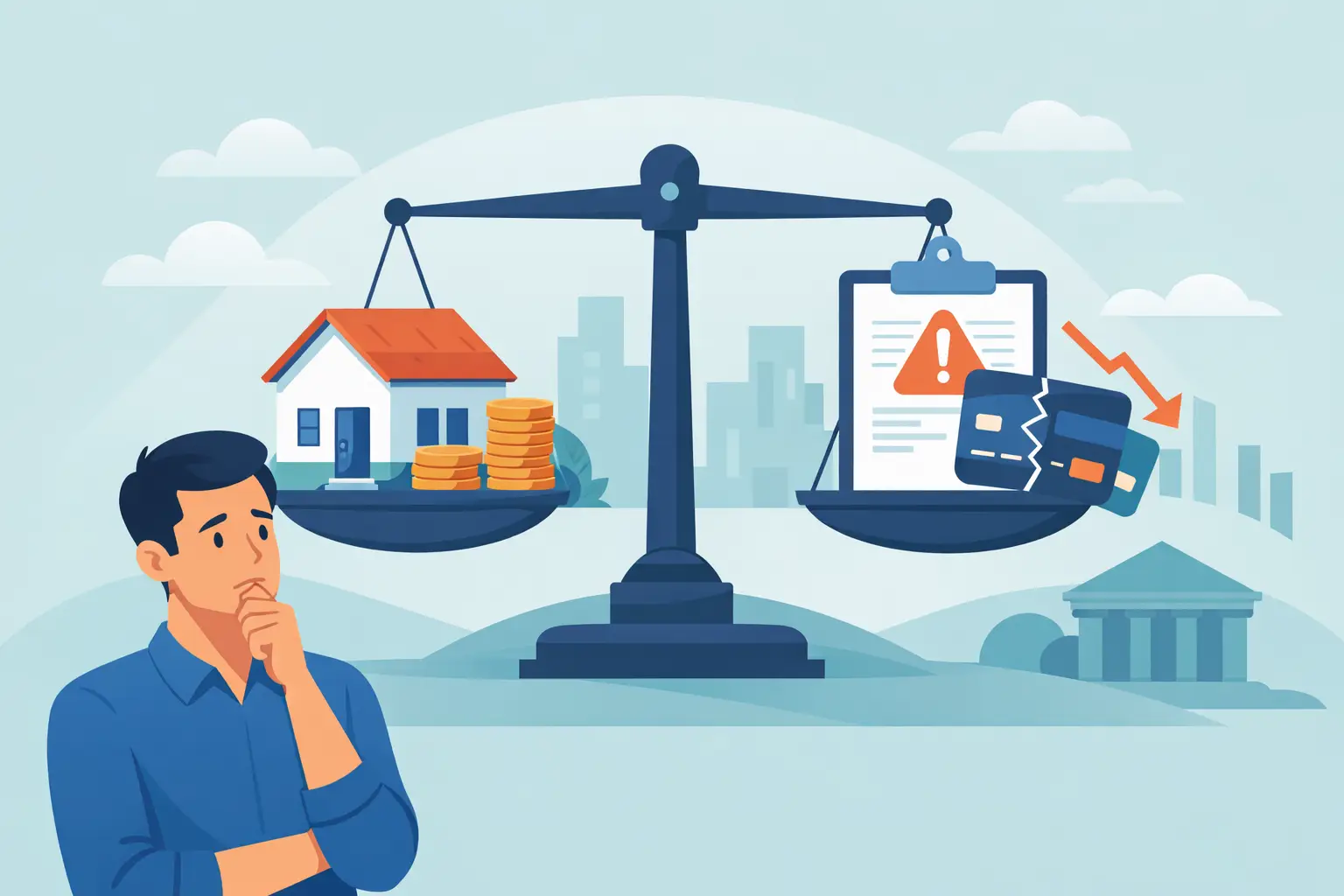
A missed bill from years ago should not automatically decide whether you can buy a home now. If you are asking, can I get a home loan with a credit default on my record, the practical answer is yes, in some circumstances. A mainstream bank may say no because its policy is rigid. That does not mean every lender will reach the same decision.
Specialist and non-conforming lenders look beyond the label on your credit file. They will still assess the risk carefully, but they can consider the reason for the default, whether it has been paid, how long ago it occurred, and what your finances look like today.
Can I get a home loan with a credit default on my record?
A credit default does not make a home loan impossible. It does, however, narrow the lender pool and change the type of loan you may qualify for. Your interest rate may be higher than a prime bank rate, you may need a larger deposit, and the lender may ask more questions about your recent conduct.
The key issue is not simply that a default exists. It is whether the default suggests an ongoing problem or a past event that has been addressed. A one-off telecommunications or utility default, paid several years ago, is generally viewed very differently from recent unpaid defaults across multiple credit accounts.
A specialist lender may consider an application where a bank will not, particularly where you have stable income, a genuine deposit or equity, and a sensible explanation supported by evidence. This is where it pays to think outside the box rather than applying repeatedly to lenders whose policy is clearly not a fit.
What lenders look at beyond the default
Every lender has its own credit policy, so there is no single deposit amount, income level or waiting period that guarantees approval. Still, most specialist lenders will focus on a consistent set of questions.
Was the default paid, and when?
A paid default is usually easier to manage than an unpaid one. Paying it does not necessarily remove it from your credit report immediately, but it shows you have dealt with the debt. Lenders will also look at its age. A default from several years ago, followed by clean repayment behaviour, carries less weight than one recorded in the past few months.
If a default is unpaid, a lender may require it to be cleared before settlement or may take it into account when setting the loan terms. In some cases, refinancing or debt consolidation can be part of the solution, but the loan still needs to be affordable.
Why did it happen?
Context matters. Redundancy, illness, relationship separation, an interrupted business cash flow period or an administrative dispute can all lead to missed payments. None of these circumstances automatically results in approval, but a clear and honest explanation can help a lender understand whether the event is likely to happen again.
Be ready to explain what changed. For example, a borrower may have returned to permanent employment, paid out old debts, reduced living costs, or built a reliable income stream after a difficult period. Documents that support the explanation can make the assessment more straightforward.
What has happened since?
Recent repayment conduct is often more persuasive than an old credit mistake. Lenders may review your credit report, bank statements and existing liabilities to see whether you are now meeting commitments on time.
They will want to see that your accounts are under control. Repeated late payments, new defaults, payday loans or growing credit card balances after the original default can make an application difficult. On the other hand, stable savings, paid bills and well-managed loans help demonstrate that the default is not your current financial position.
Can you afford the proposed loan?
Serviceability still matters. A lender will assess your verified income, ongoing expenses, dependants, current debts and the proposed home loan repayment. A good deposit does not replace the need to show that repayments are manageable, especially if rates rise.
PAYG borrowers may provide payslips and employment information. Self-employed applicants may use financial statements and tax returns, or, where appropriate, a low doc option supported by business activity statements, accountant information or bank statements. The right evidence depends on the lender and your circumstances.
How much deposit or equity do you have?
A larger deposit can strengthen an application because it reduces the lender’s risk. Some credit-impaired home loan options may be available with lower deposits than others, but the maximum loan-to-value ratio will depend on the type, age and number of defaults, your income, and the security property.
If you already own a property, usable equity may provide options for refinancing, consolidating debts or accessing funds for an approved purpose. Borrowing against equity is not a quick fix for uncontrolled spending. It needs to leave you with a repayment structure you can genuinely sustain.
The difference between a default and a declined application
Being declined for finance is not itself a credit default. However, multiple credit enquiries in a short period can concern lenders because they may suggest financial pressure or repeated unsuccessful applications.
If your bank has declined you, avoid sending applications everywhere in the hope one sticks. Each application should be considered carefully. A specialist broker can assess the likely lender fit before a formal application is submitted, helping you avoid unnecessary enquiries and wasted time.
Steps that can improve your position
You do not need a perfect credit history to take meaningful steps forward. Start by obtaining a copy of your credit report and checking that the information is accurate. If a listing is incorrect, disputed or has been duplicated, address that before applying. Do not assume every entry is right.
Next, pay or formalise any overdue debts where possible and keep every current commitment up to date. Reduce high-interest consumer debt and avoid taking out new credit in the lead-up to a home loan application. Even small changes, such as lowering credit card limits you do not use, can improve your overall position.
Build a deposit and maintain a clear savings pattern where you can. If your deposit comes from a gift, sale of an asset or equity rather than saved funds, be upfront. Lenders are less concerned with a perfect story than with a transparent, well-supported one.
Finally, prepare your explanation before you apply. Keep it factual: what happened, when it happened, how the debt was resolved and what is different now. A short, credible explanation is better than trying to hide a credit event that the lender will see on your report.
When waiting may be the smarter move
Sometimes the best outcome is not an immediate application. If your default is very recent, unpaid, or followed by ongoing missed payments, a few months of stabilising your finances may materially improve your options. This could mean clearing a small debt, building more deposit funds, reducing liabilities or establishing a stronger repayment record.
Waiting has a trade-off. Property prices and interest rates can move, and no one can promise a future loan will be cheaper. But applying too early can result in another decline and further enquiries on your report. The right timing is about being realistic, not giving up.
A second opinion when your bank says no
Traditional banks are built around standard policy. When your Bank says NO, the answer may be about policy rather than your ability to recover financially or service a loan. Non Conforming Loans works with specialist funding options for borrowers whose credit record, income documents or circumstances sit outside mainstream rules.
The aim is not to place you into a loan at any cost. It is to identify whether there is a suitable pathway, what the likely terms may be, and what you can do if you are not ready yet. That includes purchase loans, refinancing and debt consolidation where it makes financial sense.
A credit default is a record of a difficult point in time, not a permanent verdict on your future. Put the facts on the table, protect your recent repayment history and seek advice based on your real circumstances. The right next step may be a specialist loan now, or a clear plan that puts you in a stronger position to apply later.