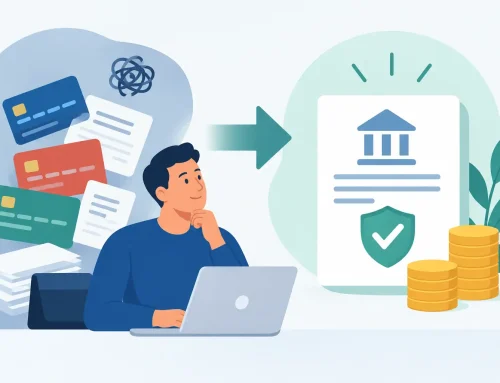
A stack of credit card statements, personal loans, overdue bills and buy now pay later repayments can make one question feel urgent: can I get a debt consolidation loan with bad credit? For many Australians, the answer can be yes. A poor credit score or past default may narrow your options, but it does not automatically mean you cannot refinance your debts into one manageable repayment.
The right solution depends on why your credit is impaired, whether you have security such as a home or investment property, and whether you can show you can afford the new loan. When your Bank says NO, a specialist lender may look at the broader story rather than making a decision based on one credit score.
Can I get a debt consolidation loan with bad credit in Australia?
A debt consolidation loan combines eligible debts into a single new facility. Depending on your circumstances, this could include credit cards, personal loans, car finance, ATO debt, unpaid rates, buy now pay later balances and some business debts. The aim is to replace multiple repayment dates and often high interest rates with one repayment that fits your current budget.
Bad credit can make an unsecured personal loan difficult to obtain, particularly if you have recent missed repayments, defaults, court judgments or a discharged bankruptcy. However, homeowners may have another path: refinancing or increasing a mortgage to consolidate debts. This is commonly called a debt consolidation home loan.
Specialist lenders assess applications that mainstream banks may decline. They will still apply lending criteria and responsible lending requirements, but they may be more flexible about credit history, the type of income you receive, and the documents used to verify it. A recent problem that has been explained and resolved can be viewed very differently from ongoing unpaid liabilities.
Why a lender may still consider your application
A credit report is one piece of the application, not the whole application. Lenders generally want to understand what happened, whether the issue is continuing, and what has changed since then.
For example, a default caused by a period of illness, relationship separation, reduced work hours or a failed business may be considered differently if you are now back in stable employment and meeting all current commitments. The same can apply to self-employed borrowers who had a difficult trading period but have since rebuilt consistent cash flow.
Your available equity is often a major factor. If you own a property worth more than the balance of your current mortgage, that equity may be used to pay out unsecured debts. The loan-to-value ratio, known as LVR, helps determine the lender choices available. Lower LVRs generally provide more options because the lender has a larger equity buffer.
Serviceability matters just as much. The new repayment must be affordable after the lender considers your income, living expenses, existing liabilities and the interest-rate buffer it applies. Consolidation should improve your position, not simply postpone a repayment problem.
The difference between secured and unsecured consolidation
An unsecured consolidation loan does not require property security. It may suit a smaller debt amount, but bad credit can mean higher interest rates, lower borrowing limits or stricter approval criteria.
A secured consolidation loan uses property as security, usually through a refinance. This may allow a larger loan amount and a lower rate than unsecured credit, even where the borrower has credit impairment. The trade-off is serious: debts that were previously unsecured become secured against your home. If repayments are not maintained, your property is at risk.
Extending short-term debts over a 20- or 30-year mortgage can also increase the total interest paid, even if the monthly repayment falls. Some borrowers choose to make extra repayments or set a shorter repayment strategy for the consolidated portion. The right structure is about both cash-flow relief now and the total cost over time.
What lenders will look at beyond your credit score
A well-prepared application gives the lender a clear picture of your current financial position. This is particularly valuable when your file includes defaults, arrears or other adverse events.
Lenders commonly consider your employment stability or business income, current mortgage conduct, equity position, repayment history since the credit issue, the age and amount of any defaults, and whether outstanding debts will be cleared at settlement. They may also ask for a written explanation of the circumstances behind adverse credit.
If you are self-employed, current financial statements are not always the only route. Depending on the lender and loan purpose, alternative documentation such as business activity statements, accountant evidence or bank statements may help support an application. PAYG borrowers may be able to use payslips and employment evidence, while applicants receiving commissions, overtime or allowances need to show which income is regular and ongoing.
Be upfront about every debt. Leaving out a credit card, tax debt or personal loan may cause delays once a lender reviews your credit file and bank statements. Clear information early gives your broker more scope to think outside the box and structure a realistic application.
When debt consolidation may help, and when it may not
Consolidation can be useful when high-interest repayments are putting pressure on your household budget but your income is stable and your property has enough equity. It can simplify finances, stop several debts from competing for your next pay, and create a practical plan for getting back on track.
It may not be the right answer if the new loan only makes room to take on more debt, if your income remains uncertain, or if the property has little equity. In those situations, reducing expenses, negotiating payment arrangements with creditors, selling an asset, or speaking with a free financial counsellor may be safer first steps.
It is also worth checking whether a debt can be paid out early without penalties and whether any fees apply to your existing home loan. The new facility may involve valuation costs, discharge fees, application fees, risk fees or lender mortgage insurance in some circumstances. These costs should be set out clearly before you proceed.
How to strengthen a bad credit consolidation application
You do not need a perfect financial past to present a stronger application. You do need evidence that your situation is more stable than the credit report alone suggests.
Start by collecting recent loan statements showing the exact payout figures for each debt. Review your credit report for errors and challenge incorrect listings before applying. Then prepare evidence of your income and expenses so the proposed repayment can be tested honestly.
The following documents are often helpful when applying for a debt consolidation mortgage:
- Recent payslips, tax returns, business activity statements or bank statements that support your income.
- Current home loan statements and a list of every debt to be consolidated, including payout amounts.
- A clear explanation for defaults, arrears, bankruptcy or other credit events, with evidence that the issue has been resolved where available.
- Details of regular living expenses, dependants, rental income and any financial commitments that will remain after settlement.
Avoid making multiple loan applications in a short period. Numerous credit enquiries can make lenders concerned that you are under financial pressure or being declined elsewhere. A specialist broker can assess your position first and target lenders whose policy is more likely to fit.
The role of a specialist broker
A broker who works with non-conforming and specialist lenders can help separate a possible deal from an unsuitable one. That means checking your equity, calculating a realistic repayment, reviewing the age and type of adverse credit, and identifying whether a full-document, low-doc or near-prime pathway may apply.
Non Conforming Loans works with borrowers whose applications do not fit standard bank policy, including homeowners consolidating debts after defaults, arrears or a discharged bankruptcy. The focus should always be on matching the loan structure to the reason you need it, rather than forcing your circumstances into a product that does not solve the problem.
Approval is never guaranteed, and a specialist loan may cost more than a prime bank loan initially. But improving your repayment conduct over time may create an opportunity to refinance again later, once your credit profile and equity position have strengthened.
If debt repayments are taking over your pay cycle, do not assume a past credit problem has closed every door. Gather the facts, be honest about what changed, and seek a second opinion before deciding that the only answer is to keep juggling debts.