A strong business can have steady clients, healthy cash flow and real equity in property, yet still be declined by a major bank because last year’s tax return does not fit its policy. That is where low doc loans can provide a practical alternative. They are designed for borrowers whose income is genuine but not easily shown through the full set of financial documents a mainstream lender may demand.
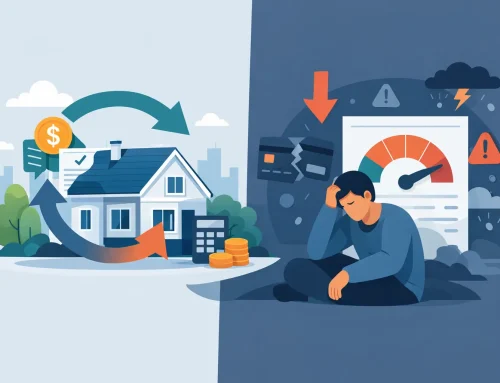
For many self-employed Australians, the problem is not an inability to meet repayments. It is the gap between how a bank wants income presented and how a business actually operates. Seasonal income, recent growth, retained profits, contractor work and legitimate tax deductions can all make a conventional application look weaker than it really is.
What are low doc loans?
Low doc loans are home loans that use a reduced-documentation pathway to assess income. They are commonly used by self-employed applicants, company directors, sole traders, contractors and business owners who do not have up-to-date tax returns or full financial statements available.
Low doc does not mean no questions asked, and it does not mean a lender ignores your capacity to repay. Specialist lenders still need to assess the application responsibly. The difference is that they may accept alternative evidence of income, together with an income declaration, rather than relying solely on the standard two years of tax returns and financials.
Depending on the lender and your circumstances, supporting documents may include recent business activity statements, business bank statements, accountant-prepared information, current contracts, invoices or evidence of an established trading history. The right combination depends on the lender, the loan amount, the property and the overall strength of your application.
When low doc home loans can make sense
Low doc finance is often suitable when your paperwork is behind, but your business is moving forward. Perhaps you have only recently become self-employed after years in PAYG work. Maybe your accountant has not finalised your latest returns, or your taxable income is reduced by depreciation and other legitimate business expenses.
It can also suit borrowers whose income varies through the year. A builder, consultant, transport operator, tradesperson or professional contractor may have uneven monthly revenue, while still maintaining reliable annual earnings and sufficient cash flow to support a mortgage.
A low doc loan may be used to purchase a home or investment property, refinance an existing mortgage, release equity for a legitimate purpose, consolidate higher-interest debts, or fund construction in the right circumstances. Some business owners also refinance to improve cash flow after a bank has reduced their options or refused a straightforward renewal.
The key question is not simply, “Do I have every document a bank wants today?” It is, “Can my income and overall position be demonstrated in a credible way?” When your Bank says NO because of a policy box, a specialist assessment can be worth seeking.
What alternative documents can I provide to prove my income?
Generally a Declaration of Income is required plus one of the below documents to support your declaration of income:
- An Accountants Letter verifying your income.
- 6 months of Lodged BAS Statements from the ATO Portal.
- 6 months of Business Bank Statements.
- Self-Employed (company directors only): 3-months payslips AND last financial year ATO income statement
How much deposit do I need on a low doc loan?
Low Doc Residential Property Loans (case by case and subject to location)
- $3,000,000 between 75% > 95% of Property Value.
- $7,500,000 between 70% > 75% of Property Value
- $10,000,000 between 65% > 70% of Property Value
- $15,000,000 up to 65% of Property Value
Low doc loans are not a shortcut around affordability
A reduced-documentation loan can be more flexible, but it still needs to be affordable. Lenders will consider the proposed repayments alongside your declared income, existing debts, household expenses, credit history, deposit or equity, and the security property.
They may also look closely at how your business conducts its banking. Regular deposits, sensible account management and a clear pattern of trading can strengthen an application. Conversely, overdue tax obligations, dishonoured payments, unexplained large transfers or unstable revenue may require more explanation or reduce the available options.
Honesty matters. Declaring an income that cannot reasonably support the loan is not a solution to a documentation problem. It can lead to a declined application, or worse, place pressure on your household and business later. A good broker will help you present a realistic application, not push you into a repayment that only works on paper.
What affects your loan options?
There is no single low doc policy across the market. One lender may be comfortable with recent BAS statements and a strong deposit, while another may want longer trading history or business bank statements. Rates, fees, maximum loan amounts and loan-to-value ratios can differ substantially.
Your options will usually be shaped by several connected factors:
- how long you have been self-employed and the stability of your industry
- the type and consistency of documents available to support your declared income
- your deposit or usable equity, and the property location and type
- your credit file, including any defaults, arrears, repayment arrangements or past financial hardship
- existing home loans, business loans, credit cards, vehicle finance and tax debt
A clean credit history and a lower loan-to-value ratio can generally open up more competitive choices. But an imperfect credit record does not automatically rule you out. Specialist lending exists because real life is more complicated than a standard bank scorecard.
For example, a business owner may have a past default caused by a customer failing to pay an invoice during a difficult period. Another may have completed a debt arrangement, paid out tax arrears, or rebuilt after a separation. Those circumstances need to be assessed carefully, but they should be understood in context rather than treated as a permanent label.
The trade-off: flexibility may cost more
Low doc loans can offer a valuable path forward, but they are not always the cheapest loans on the market. Because there is less traditional income documentation, lenders may price for the additional risk. Interest rates, risk fees and lender fees can be higher than those available to a borrower who meets full-doc prime lending criteria.
That does not automatically make a low doc loan the wrong choice. The comparison should be based on the whole outcome. If the loan allows you to buy a suitable property, refinance an expensive debt, keep working capital in the business or avoid selling an asset under pressure, the value may be greater than the difference in rate.
It is also worth considering whether the loan is a stepping stone. As your financials become current, your credit position improves, or your equity increases, refinancing to a different product later may be possible. There are no guarantees, and refinance costs need to be weighed up, but a short-term specialist solution does not have to define your lending future.
How to prepare a stronger low doc application
Preparation can make a real difference, especially if you have already received a decline from a bank. Start by gathering the most current information you have. Recent BAS, business bank statements and accountant documents are useful because they show the lender what is happening now, not merely what happened two financial years ago.
Be clear about your business structure. A sole trader, company director, partnership and trust beneficiary may need to show income differently. If income is retained in a company, paid through drawings, or split between entities, the application needs a sensible explanation. Trying to simplify the story too much can create more questions later.
It also helps to review your liabilities before applying. Reduce unused credit card limits where practical, identify any buy now pay later accounts, and make sure repayment amounts are accurate. If you have a credit issue, provide the reason and evidence of the issue being resolved. A clear explanation is far better than leaving a lender to make assumptions.
Finally, avoid making multiple direct applications without a plan. Repeated enquiries and inconsistent information can make an already complex file harder to place. The lender that suits a first-year contractor with a 30 per cent deposit may not suit an established business owner seeking a high loan-to-value refinance with a past default.
A second opinion can change the conversation
Being declined by a bank is frustrating, particularly when you know your business is capable and your repayment history is sound. But a bank decline is not always a no to lending. Often, it is a no to that lender’s policy, document rules or risk appetite.
Non Conforming Loans works with borrowers who need someone to think outside the box and assess the full picture. The aim is not to force every application into a low doc product. It is to identify whether a reduced-documentation pathway, a near-prime option or another specialist loan structure best suits your goals and current position.
Before committing to any loan, ask for a clear breakdown of the rate, fees, repayments, loan features and the documents still required. The right low doc loan should give you room to move forward with confidence, while keeping the repayment sustainable for both your household and your business.