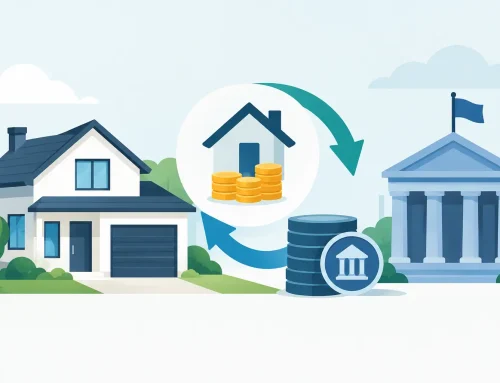
A stack of repayments can become unmanageable long before you have missed one. Credit cards, personal loans, car finance, buy now pay later accounts and overdue bills can all pull from your pay on different dates, at different rates. To refinance multiple personal debts is to replace eligible balances with one new facility, ideally with a repayment structure that gives you breathing room rather than another short-term patch.
For some Australians, a debt consolidation refinance through a home loan is worth considering. For others, it is the wrong move, particularly if the new loan only makes repayments look lower by stretching debt over too many years. The useful question is not simply, “Can I consolidate?” It is whether the new arrangement improves your position after fees, interest and the risk of securing debt against your property.
What it means to refinance multiple personal debts
Refinancing means taking out a new loan to pay out existing liabilities. Where you own property, this may involve increasing your mortgage or moving it to a new lender with enough funds to clear selected debts. The result can be one repayment instead of several.
The debts commonly considered include credit cards, unsecured personal loans, vehicle loans, store cards, payday loans and buy now pay later balances. In some cases, borrowers also need funds for ATO debt, overdue strata levies or business liabilities. Each debt must be assessed separately, because lenders may have rules about what can be refinanced and how the funds are paid.
A responsible structure usually pays creditors directly at settlement. That provides a clear record that the balances have been cleared and reduces the temptation to use the cash for something else. If credit cards are paid out, consider whether the limits should be reduced or the accounts closed. Leaving $30,000 of cleared card limits open can undermine the purpose of consolidation and may affect future borrowing capacity.
Why one repayment can help – and when it does not
The obvious benefit is simplicity. Instead of tracking five due dates and trying to cover high minimum repayments, you have one scheduled repayment. A lower interest rate may also reduce the monthly strain, especially where expensive revolving debt is involved.
That said, a lower repayment is not automatically a lower cost. Moving a $20,000 credit card balance into a 25-year mortgage can cost more interest overall if you only make the minimum mortgage repayment. The right approach is often to consolidate the debt but keep paying an amount that clears the consolidated portion quickly. Some borrowers use a separate loan split for this reason, with a shorter term and fixed repayment target.
There is another major trade-off. Unsecured debts do not put your home directly at risk. Once they are rolled into a mortgage, the new debt is generally secured by your property. If repayments cannot be maintained, the consequences are more serious. Consolidation needs a realistic household budget, not optimism about a better month ahead.
Signs a refinance may be worth assessing
A refinance can be practical where your income is stable, your debts are expensive, and you have enough equity in your property to support the new loan. It can also help if repayment dates are causing cash-flow pressure despite your overall income being sufficient.
It may be particularly useful for a self-employed borrower who has cleared a temporary rough patch but is still carrying costly personal debt, or for a PAYG borrower whose credit file has been affected by earlier hardship. A mainstream bank may see the missed payments and decline the application without looking closely at the full story. Specialist lenders can sometimes take a more considered view of how the issue arose, whether it has been resolved, and whether the proposed refinance makes repayments sustainable.
A refinance is less likely to be the right answer if there is no room in the budget after essential expenses, the debts are continuing to grow, or the property has limited usable equity. In that situation, financial hardship assistance, a payment arrangement with creditors or free financial counselling may need to come first.
How lenders assess a debt consolidation refinance
Lenders look at more than the total amount you want to borrow. They assess the property value, current mortgage balance, proposed loan size, income, living expenses, credit history and the purpose of the funds. They also apply serviceability tests that allow for interest-rate movements.
Your loan-to-value ratio, or LVR, matters. It is the proposed loan amount as a percentage of the property value. If your property is worth $800,000 and the total loan after consolidation would be $600,000, the LVR is 75 per cent. Lower LVRs generally create more lender options, but specialist funding may still be available where the LVR is higher and the overall application is sound.
Credit impairment does not always mean finance is impossible. Defaults, late payments, prior hardship arrangements and discharged bankruptcy can affect lender choice, pricing and deposit or equity requirements. The key is to disclose the position honestly. Trying to hide debts or missed repayments usually creates delays and can result in a decline when documents are checked.
Self-employed applicants may be able to use alternative documentation pathways where full financials are not current, depending on the lender and circumstances. Australian citizens earning overseas income, temporary visa holders and borrowers with complex employment arrangements may also need a more tailored assessment than a standard bank application allows.
Calculate the real cost before you proceed
Before refinancing, list every debt balance, interest rate, minimum repayment and any payout or early termination fee. Then compare those figures with the proposed loan rate, establishment fees, valuation costs, discharge fees, lender mortgage insurance where applicable, and ongoing charges.
Do not compare rates alone. A slightly higher specialist loan rate may still make sense if it clears multiple high-interest debts, stops arrears from escalating and gives you a manageable repayment plan. Equally, a very low advertised mortgage rate may not be available to an applicant with recent credit issues or non-standard income.
Ask for the projected repayment at the new rate and at a higher rate. Then test it against real life: groceries, school costs, insurance, utilities, petrol, medical expenses and irregular annual bills. A workable refinance leaves a buffer. It should not depend on every fortnight going perfectly.
A better way to structure the new loan
Where possible, separate the existing home loan from the amount used for consolidation. This can make it easier to see the consolidated balance falling and to pay it down faster. It may also preserve clearer records for tax and accounting purposes where business debt is involved, although personalised tax advice should come from your accountant.
Avoid treating the new loan as a source of fresh spending money. If the refinance includes cash out for essential repairs, tax debt or another genuine purpose, keep that amount defined and documented. Blending unrelated spending into one large loan can make it harder to regain control.
A good plan also deals with the behaviour that created the debt. That might mean setting aside a small emergency fund, changing card limits, adjusting direct debits, or building a monthly budget around irregular expenses. Consolidation can provide the structure, but the plan keeps it working.
What to prepare for an application
Clear paperwork helps a specialist lender assess the situation quickly. You will generally need identification, recent payslips or income evidence, bank statements, statements for all debts being refinanced, your current home loan statement and details of the property. Self-employed borrowers may need BAS statements, business bank statements, accountant-prepared figures or other income verification, depending on the loan option.
Be ready to explain any credit events in plain terms. A short explanation supported by evidence can be more helpful than trying to avoid the subject. For example, an unpaid default linked to illness, a relationship breakdown or a business interruption may be viewed differently where the issue is resolved and repayments have since stabilised.
When your bank says no, that is not necessarily the end of the conversation. Non Conforming Loans can assess whether a specialist debt consolidation refinance suits your equity, income and credit position, without treating a complicated history as a permanent label.
The right refinance should leave you with a repayment you understand, a clear plan to reduce the balance, and fewer financial surprises each month. If those pieces are not in place, pause before signing. A second opinion can be the practical step that turns several stressful debts into one manageable path forward.