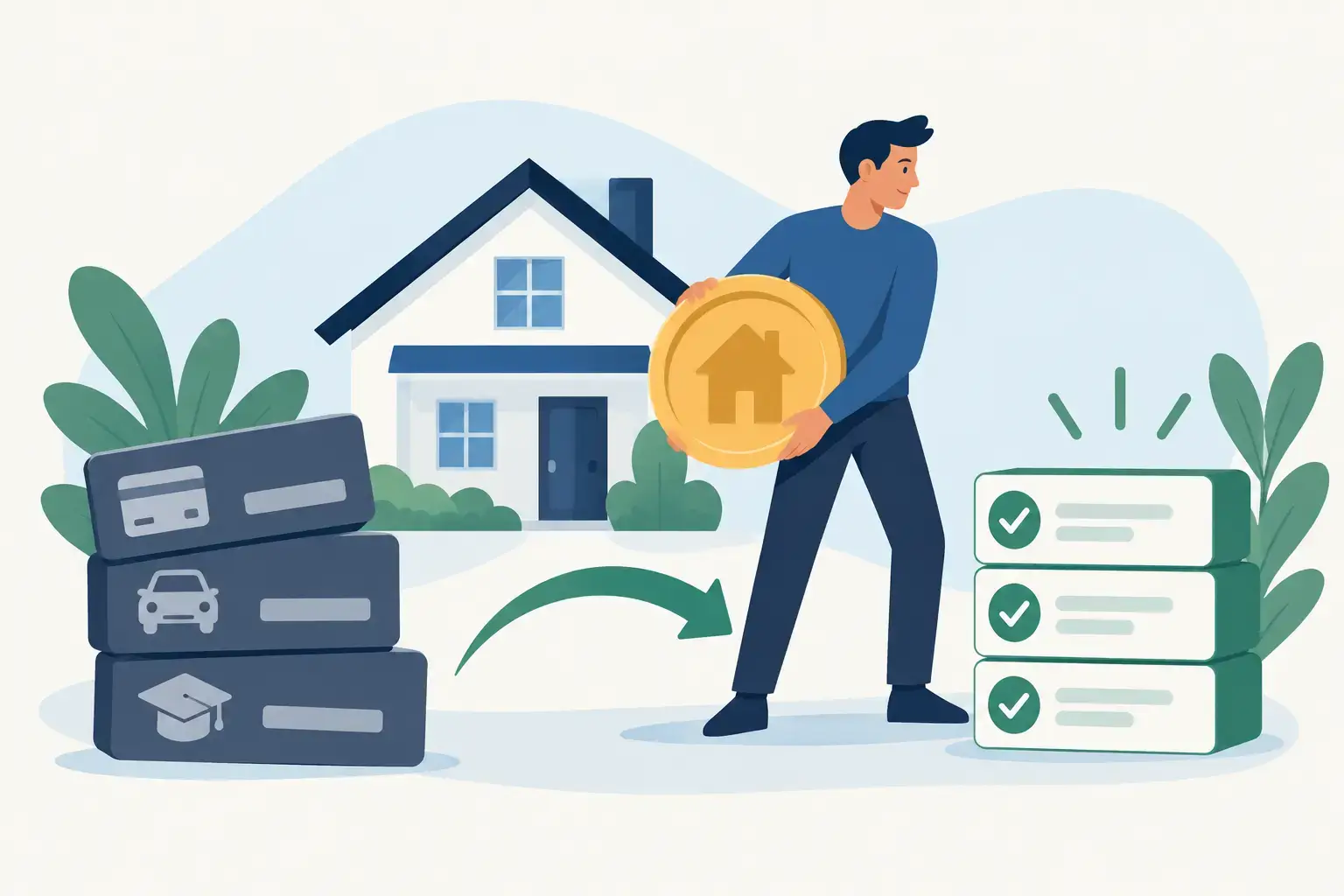
A credit card balance, personal loan, car finance and overdue bills can quickly turn into several repayments leaving your account every month. The decision to clear personal debts using equity may reduce that pressure by rolling high-interest unsecured debts into one home loan repayment. But it changes the type of debt you hold, and that deserves a clear-eyed assessment before you proceed.
For many Australians, this option is not about spending more. It is about regaining control after a run of expensive credit, a business slowdown, illness, separation or a bank decline. Equity can create a practical path forward, provided the new loan is structured around what you can genuinely afford.
Can You Clear Personal Debts Using Equity?
Yes, if you own a property with sufficient usable equity and meet a lender’s serviceability requirements. Equity is the difference between your property’s current value and the amount still owing on its mortgage. Not all of that amount will be available to access, because lenders usually limit borrowing to a percentage of the property value.
For example, if your home is valued at $800,000 and you owe $500,000, you have $300,000 in total equity. If a lender will consider lending up to 80% of the property value, the maximum loan could be $640,000. In this example, there may be up to $140,000 available before allowing for establishment costs, valuation outcomes and any lender mortgage insurance requirements.
That available amount may be used to pay out credit cards, unsecured personal loans, payday loans, tax arrears or other eligible debts. Rather than managing several due dates and interest rates, you have one consolidated facility secured against property.
Why Home Equity Can Be a Useful Debt Consolidation Tool
Unsecured debts often carry higher interest rates than a mortgage. Consolidating them into a home loan may lower the interest rate and reduce the required monthly outgoings. That can improve cash flow, particularly for households that have been relying on credit cards to bridge ordinary living costs.
It can also simplify your finances. One repayment, one statement and a clear plan can be easier to manage than a collection of balances with different payment dates. If missed repayments or defaults have affected your credit file, settling outstanding debts may also be an important step in rebuilding financial stability over time.
However, a lower repayment does not automatically mean a cheaper outcome. A mortgage is normally repaid over a much longer term than a personal loan or credit card balance. If you add $30,000 of personal debt to a 30-year home loan and only make the minimum repayment, you could pay interest on that amount for decades.
The better approach is often to consolidate, then set the repayment at a level designed to pay the consolidated portion down sooner. An offset account, redraw facility or regular extra repayments may help, depending on the loan product and your circumstances.
The Main Trade-Off: Unsecured Debt Becomes Secured Debt
This is the point that should never be overlooked. Credit cards and personal loans are generally unsecured. When you refinance them into a mortgage, the debt becomes secured against your home or investment property.
That can be sensible where the repayment is sustainable and the refinance solves a genuine problem. It can be dangerous if it merely creates room to build up the same credit card balances again. If repayments cannot be maintained, your property is at risk.
Before using equity, ask yourself whether the underlying cause of the debt has changed. If the balance arose from a one-off event, such as medical expenses, a temporary drop in income or a business interruption, consolidation may provide breathing room. If spending regularly exceeds income, the loan needs to be paired with a realistic household budget and changes to how credit is used.
It is also worth considering what happens if interest rates rise, work hours reduce or a fixed-rate period ends. A lender will assess serviceability, but your own budget should be more conservative than the minimum test. Leave room for rates, insurance, school costs, car repairs and the ordinary surprises that arrive without warning.
What Debts Can Usually Be Included?
The debts a lender may allow you to consolidate depend on the loan purpose, security property and individual credit profile. Common examples include credit cards, personal loans, vehicle finance, store cards, overdue rates, strata levies and tax debt.
Business debt can sometimes be included where there is a clear purpose and suitable security, although the assessment may differ from a straightforward residential refinance. A self-employed borrower who used personal credit to support cash flow, for instance, may need to provide more detail about the business and its current income.
Not every liability should be rolled into a mortgage. Interest-free finance close to being repaid, a low-rate fixed personal loan, or a debt with an early repayment penalty may be better dealt with separately. The aim is not to put every balance into one loan at any cost. It is to create a structure that improves your position.
What Lenders Will Look At
Equity matters, but it is only one part of the application. Lenders will also consider your income, employment or business position, existing liabilities, repayment conduct, property type and credit history.
A clean credit report and standard PAYG income may suit a broad range of lenders. If you have defaults, arrears, discharged bankruptcy, a small business with uneven income, or limited financial statements, mainstream bank policy can be restrictive. That does not necessarily mean finance is impossible. It may mean the application needs to be placed with a specialist lender that understands non-conforming circumstances.
Documentation requirements vary. Some borrowers can provide payslips and bank statements, while others may use accountant-prepared information, business activity statements or alternative income evidence. Be upfront about every debt and any credit issue from the start. Surprises found late in the process can delay a refinance or reduce the available options.
How to Structure a Safer Refinance
A debt consolidation refinance should be built around a repayment plan, not simply the maximum amount a property can support. Start by listing each debt, its payout figure, interest rate, repayment and any exit cost. This shows whether consolidation is likely to make a meaningful difference.
Next, separate essential debt consolidation from optional cash out. Borrowing extra for renovations, a vehicle or discretionary spending may be appropriate in some cases, but it should not obscure the core purpose of reducing financial pressure.
Consider whether a variable loan, fixed loan or split structure fits your situation. A variable rate may offer flexibility for extra repayments and redraw, while a fixed rate can provide repayment certainty for an agreed period. A split loan can balance both, although features and fees differ between products.
Finally, close or reduce the limits of paid-out credit cards where appropriate. Leaving several large limits open can affect future borrowing capacity and creates a temptation to repeat the cycle. Keeping one modest card for genuine emergencies may suit some households, but the decision should be deliberate.
When Your Bank Says No
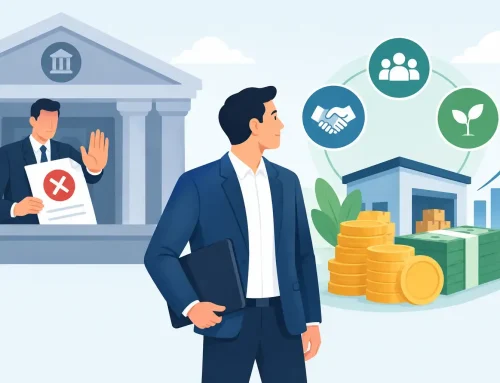
A bank decline can feel like the end of the road, especially when you have equity and know the refinance would improve your monthly position. Often, it is a policy issue rather than a complete inability to repay. Banks may decline due to credit history, recent arrears, self-employed income, loan-to-value ratio or documentation rules.
This is where a second opinion can be worthwhile. Non Conforming Loans helps borrowers think outside the box by assessing the full story, not just a narrow bank policy scorecard. Specialist lending is not automatically the cheapest option, and it should be compared carefully, but it can provide an appropriate pathway for borrowers who need time to repair their financial profile.
Take the Next Step With a Clear Plan
Using property equity to deal with personal debt is a serious financial decision, but it can be a constructive one. Focus on the total cost, the repayment you can maintain, and the habits that will keep new unsecured debt from taking its place. The right refinance should leave you with more control and a practical route towards a stronger financial position.