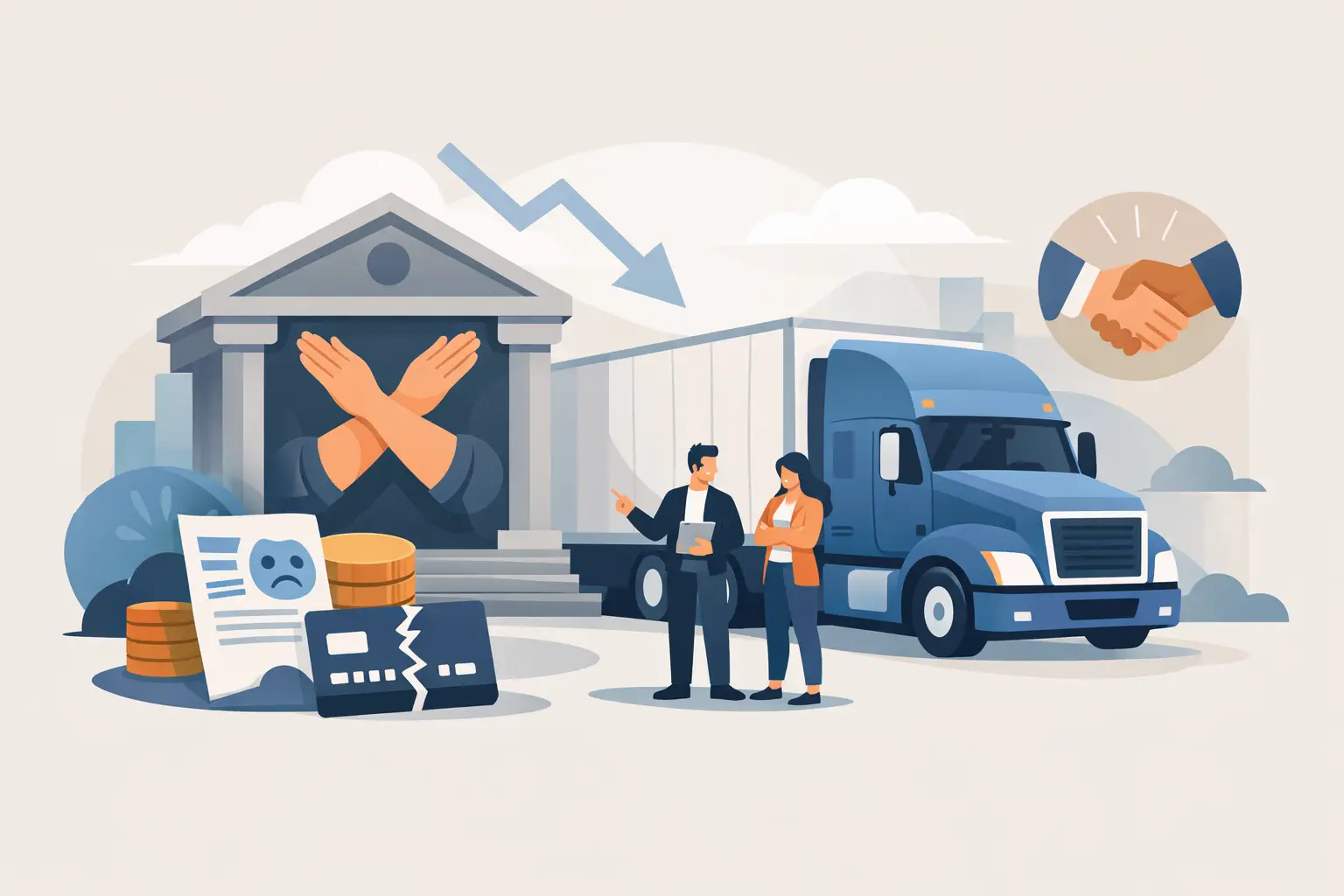
A truck sitting off the road can cost more than a missed opportunity. It can mean contracts you cannot service, staff with nothing to drive, and cash flow under pressure. Bad credit truck finance is designed for Australian owner-drivers and businesses whose vehicle is essential to earning income but whose credit history does not fit a bank’s narrow policy.
A declined application does not always mean you cannot afford the truck or that finance is out of reach. It may mean the lender could not get comfortable with a past default, tax debt, late repayments, limited financials, or a recent change in your business. Specialist asset lenders look at the full picture, including the truck, your current income, the purpose of the purchase, and the steps you have taken since a credit issue.
When bad credit truck finance may be an option
Credit problems come in many forms. You may have paid defaults from a difficult period, an active repayment arrangement, a previous commercial loan that fell behind, or a credit score affected by several applications. Self-employed operators can also be declined simply because their latest tax returns do not reflect their current workload.
Specialist truck finance may suit borrowers who have been knocked back by a bank but have a genuine commercial need and a workable way to meet repayments. This can include sole traders replacing an ageing prime mover, a transport company adding a rigid truck, a tradie purchasing a tipper, or a business refinancing a vehicle to improve monthly cash flow.
The key is not pretending the credit issue never happened. Lenders will usually see it. A clear explanation, evidence that the issue has been resolved or is being managed, and realistic repayment capacity can make a material difference to how an application is assessed.
What lenders assess beyond your credit score
A credit score matters, but it is not the entire decision. For asset finance, the vehicle itself is commonly security for the loan. That gives some specialist lenders more flexibility than an unsecured lender may have, although every application is still subject to credit assessment.
They will generally want to understand whether the proposed truck is fit for purpose, its age and value, and whether it is being bought from a dealer or private seller. Late-model trucks from recognised manufacturers are often easier to finance than older, highly specialised vehicles, but older equipment is not automatically ruled out. It depends on the lender’s acceptable asset criteria and the strength of the overall application.
Your income and serviceability remain central. PAYG applicants may provide payslips and bank statements, while business owners may be able to use business activity statements, accountant-prepared figures, management accounts, invoices, contracts, or bank statements where a low doc option is available. The right documentation path depends on the lender, loan size, asset type, and your circumstances.
Lenders may also consider your time in business, industry experience, existing commitments, deposit or trade-in, and the reason for the adverse credit. A one-off default after illness or a dispute can be viewed differently from repeated unpaid liabilities with no explanation.
Purchase, refinance or release working capital
Bad credit truck finance is not limited to buying a new truck. The right structure can be used for several practical purposes, provided the lender’s policy and your position support it.
A purchase facility may help fund a new or used truck, trailer, refrigerated unit, crane truck, tipper, van, or other income-producing commercial vehicle. A refinance may replace an existing facility where repayments are too high, the term is unsuitable, or the current lender is no longer meeting your needs.
In some circumstances, refinancing an unencumbered or substantially paid-down truck can release funds for business purposes. That might include repairs, registration and insurance, wages, stock, tax obligations, or a deposit on another asset. This should be approached carefully. Accessing equity can support growth, but it also places a debt against an asset that may already be working hard for the business.
Choose the repayment structure carefully
The cheapest-looking monthly repayment is not always the best outcome. A longer term can reduce the immediate repayment and protect cash flow, but you may pay more interest over the life of the loan. A balloon payment can lower regular instalments, yet it creates a larger amount due at the end of the term.
For a truck that generates steady contracted revenue, a balloon may be manageable if you have a clear plan to refinance, trade, or pay it out. For irregular work or a vehicle with uncertain resale value, a lower or no balloon may be safer. Your finance structure should reflect how the truck earns, how predictable your work is, and how long you expect to keep the vehicle.
Also consider the total cost, not just the advertised rate. Specialist finance can carry a higher rate than prime bank lending because the lender is taking on more risk. Fees, establishment costs, broker charges where applicable, early payout terms, and the cost of any optional products should all be clear before you proceed.
How to strengthen a truck finance application
You do not need a perfect file to present a stronger application. You do need accurate information and a sensible story. Trying to hide defaults, tax debts, or past repayment issues often creates delays and can lead to a decline when the credit report is reviewed.
Start by being clear about the vehicle and its commercial purpose. Have a quote or invoice available, along with the seller’s details. If the truck will be used for confirmed work, provide contracts, purchase orders, recent invoices, or a short explanation of the expected revenue.
It also helps to prepare evidence of your current position. This may include recent bank statements, BAS, payslips, a profit and loss statement, proof of a repayment arrangement, or confirmation that an old default has been paid. If you have a deposit or a trade-in, disclose it upfront. A contribution can reduce the amount financed and may improve the lender’s comfort, though it is not the only path to approval.
Avoid making multiple finance applications in a short period. Each enquiry can appear on your credit report, and a string of applications may concern lenders. A specialist broker can assess the scenario first and direct it to lenders whose policies are more likely to suit, rather than sending your application everywhere.
Questions worth asking before you sign
Before accepting an offer, ask whether the rate is fixed or variable, what the total repayments will be, whether there is a balloon, and what happens if you want to pay the loan out early. Confirm whether GST is financed, how insurance requirements work, and whether the lender has restrictions on the truck’s age, kilometres, or use.
If you are buying through a private sale, check whether the lender will fund it and what ownership documents are required. If the truck is imported, modified, or has specialised equipment fitted, make sure the lender knows before formal approval. These details can affect valuation and security acceptance.
A second opinion can protect your business
When your Bank says NO, it is easy to assume the answer is final. For many operators, it is simply a sign that the application needs a different lender, more suitable documentation, or a structure built around the way the business actually works.
Non Conforming Loans can provide an obligation-free second opinion for borrowers dealing with adverse credit, limited documents, or a previous decline. The aim is not to force a loan that strains your business. It is to assess whether there is a practical funding pathway and to explain the trade-offs clearly, so your next truck supports the work ahead rather than becoming another financial burden.