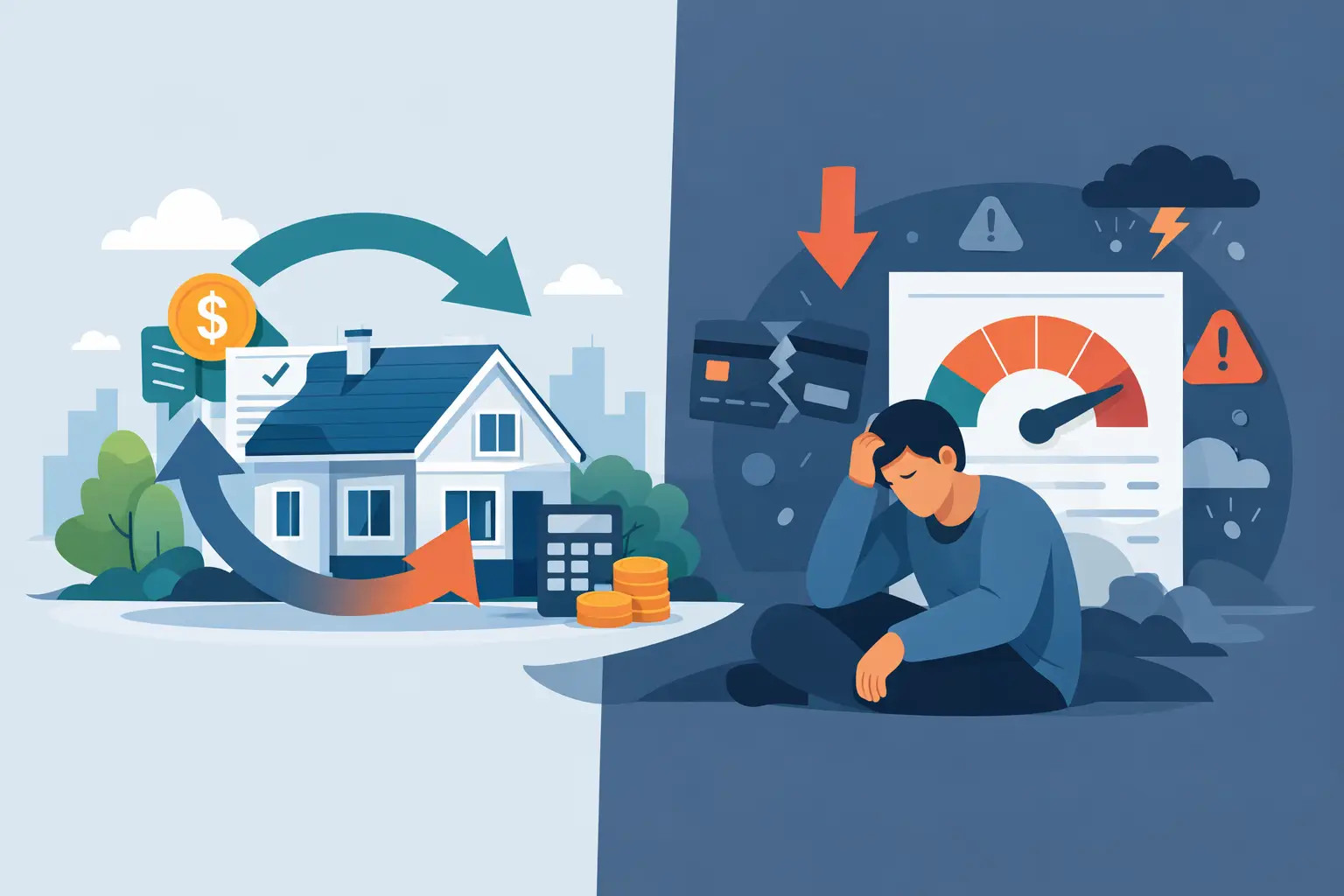
Your fixed rate has ended, your repayments have jumped, or several expensive debts are now competing with your mortgage. If you are asking, “can I refinance an existing home loan with bad credit?”, the answer can be yes. A poor credit history may limit your lender options and affect the rate or loan amount available, but it does not automatically mean you are stuck where you are.
When your bank says NO, the next step is not to give up or apply everywhere. It is to understand what has changed in your financial position, what equity you have available, and which specialist lender policy may suit your circumstances.
Can I refinance an existing home loan with bad credit?
Refinancing means replacing your current home loan with a new one. The new loan may be used to secure a more suitable repayment structure, consolidate debts, release equity for an approved purpose, remove a borrower, or simply move away from a lender whose policy no longer works for you.
Bad credit makes the assessment more detailed, not necessarily impossible. Specialist and non-conforming lenders often look beyond a credit score alone. They will still need to see that the proposed loan is affordable and responsible, but they may take a more practical view of borrowers who have had a setback and are now back on track.
The strength of an application usually comes down to the whole picture: your current income, repayment conduct, available equity, the age and cause of any credit issue, and whether there is a clear reason for the refinance.
For example, a missed mobile bill from three years ago is assessed very differently from current mortgage arrears or an unpaid court judgment. Likewise, a borrower with a discharged bankruptcy and a stable PAYG income may have more options than they expect if they have rebuilt their repayment record.
What lenders look at beyond your credit score
A specialist lender will review your credit report, but the detail matters more than a simple pass-or-fail label. They may consider defaults, late payments, debt agreements, writs, judgments, discharged bankruptcy, previous mortgage arrears and the time that has passed since each event.
They will also look closely at how you manage money now. Recent home loan repayments, rent payments, credit commitments and account conduct help show whether the earlier problem was temporary or ongoing. If you have been meeting your mortgage repayment consistently, that can be a meaningful part of your application.
Your income and documentation are equally important. PAYG borrowers may provide payslips and group certificates, while self-employed applicants may be assessed using financial statements, tax returns, BAS, accountant-prepared information or low doc pathways where appropriate. A bank may have declined your application because your paperwork does not fit its policy. That does not always mean your business income is unsuitable for refinancing.
Equity is another major factor. Equity is the difference between your property’s value and the amount you still owe. More equity generally reduces lender risk and can give you more refinancing choices. If property values have increased or you have paid down your loan, a refinance may be possible even if your credit profile is not perfect.
When refinancing may make sense
A refinance or a debt consolidation loan should solve a real problem, not just move it. It may be worth considering if your existing interest rate has become unmanageable, you need to consolidate high-interest personal loans or credit cards, or your current lender is unwilling to assist after a change in circumstances.
Debt consolidation can be useful where multiple repayments are putting pressure on your weekly cash flow. Rolling eligible debts into one mortgage repayment may reduce the immediate monthly commitment. However, the debt may cost more overall if it is repaid over a long home loan term. A responsible refinance should include a clear plan to avoid building those balances up again.
Some borrowers refinance to pay out tax debt, finalise a business obligation, fund repairs that protect the value of the property, or release equity for another legitimate purpose. The purpose affects the lender and product choice. It is better to be upfront from the beginning than try to force a complex situation into a standard bank application.
Refinancing can also be a stepping stone. You may move into a specialist loan now to stabilise your finances and demonstrate strong repayment conduct. Once your credit profile improves and your circumstances suit mainstream policy, you may be able to review your options again later.
The trade-offs of a bad credit refinance
Bad credit refinance loans are not identical to prime bank loans. Interest rates can be higher, fees may apply, and maximum loan-to-value ratios can be lower depending on the severity and recency of the credit issue. These are not details to skim over. The right question is whether the new structure improves your position overall.
Compare the interest rate, comparison rate, monthly repayments, loan term, establishment fees, valuation costs, discharge fees and any break costs on your current loan. If you are consolidating debt, compare the total cost over the proposed term as well as the immediate cash-flow benefit.
Be careful with advertisements that promise guaranteed approval or claim that credit history never matters. Responsible lenders must assess your ability to repay. A genuine specialist solution is based on evidence, appropriate lender policy and a realistic exit strategy, not a promise that sounds too good to be true.
How to prepare before applying
Start by obtaining a clear view of your current position. Check your loan balance, current repayment, interest rate, fixed-rate expiry date and any discharge or break costs. Gather recent home loan statements so you can show how the account has been conducted.
Then review your credit report for accuracy. If a default has been paid, make sure it is recorded correctly. If information is wrong, take steps to have it corrected before making new applications. Do not submit multiple applications in quick succession just to see who says yes. Numerous credit enquiries can make an already difficult file harder to place.
Prepare evidence of income and living expenses. For PAYG borrowers, this may include payslips and bank statements. For business owners, it could include BAS, trading statements, tax returns or accountant information. If your income has improved recently, explain why. A new permanent role, a recovered business, reduced expenses or the end of a costly commitment can all be relevant.
It also helps to explain the story behind any adverse credit. Keep it factual. Perhaps a relationship breakdown, illness, job loss, business interruption or delayed invoice payment caused the issue. More importantly, explain what has changed since then. Lenders want to see a credible path forward, not perfection.
Avoid creating a bigger problem
Before refinancing, avoid taking on new unsecured debt, missing current repayments or closing a loan application out of frustration. If you are already struggling to meet your mortgage payments, contact your existing lender promptly to ask about hardship assistance. Early action can protect more options than waiting until arrears grow.
A refinance is not always the best immediate answer. If there is very little equity, income is unstable, or the proposed repayment would still be unaffordable, a different arrangement may be more suitable. The goal is a loan you can realistically maintain.
A second opinion can change the conversation
Mainstream banks are built around standard policies. When your situation falls outside those rules, an automated decline can feel final even when you have income, equity and a sensible reason to refinance. Specialist lending is designed for the cases that need a closer look.
Non Conforming Loans can assess the full picture and match eligible borrowers with specialist funding lines rather than treating a past financial problem as the whole story. This may include options for adverse credit, discharged bankruptcy, self-employed borrowers, low doc applications and debt consolidation where the proposed loan meets responsible lending requirements.
The most useful refinance is not necessarily the one with the lowest advertised rate. It is the one that gives you a manageable repayment, addresses the reason you need to refinance and puts you in a stronger position for the future. If your bank has declined you, a well-prepared second opinion may be the practical next move.